
First, identify what you actually have
- Coated / pigmented leather — the vast majority of factory seats. Uniform color, slight sheen, water beads briefly on the surface. Clean with pH-balanced products.
- Perforated leather — same coating, but with ventilation holes that trap liquid. Never spray product directly; over-wetting pushes cleaner into the foam where it sours.
- Nappa / semi-aniline — softer, more porous, common in luxury trims. Needs gentler chemistry and more frequent conditioning.
- Leatherette / vinyl — many 'leather' packages. Cleans like coated leather but does not need conditioner at all.
If you can't tell, treat it as coated leather. That method is safe on every one of these.
The safe cleaning method
- Step 1. Vacuum the seams firstGrit in the perforations and stitching is what abrades the coating during cleaning. Use a soft brush and crevice tool before any liquid.
- Step 2. Test in a hidden spotTry the cleaner low on the seat back or under the bolster and let it dry before doing the whole seat.
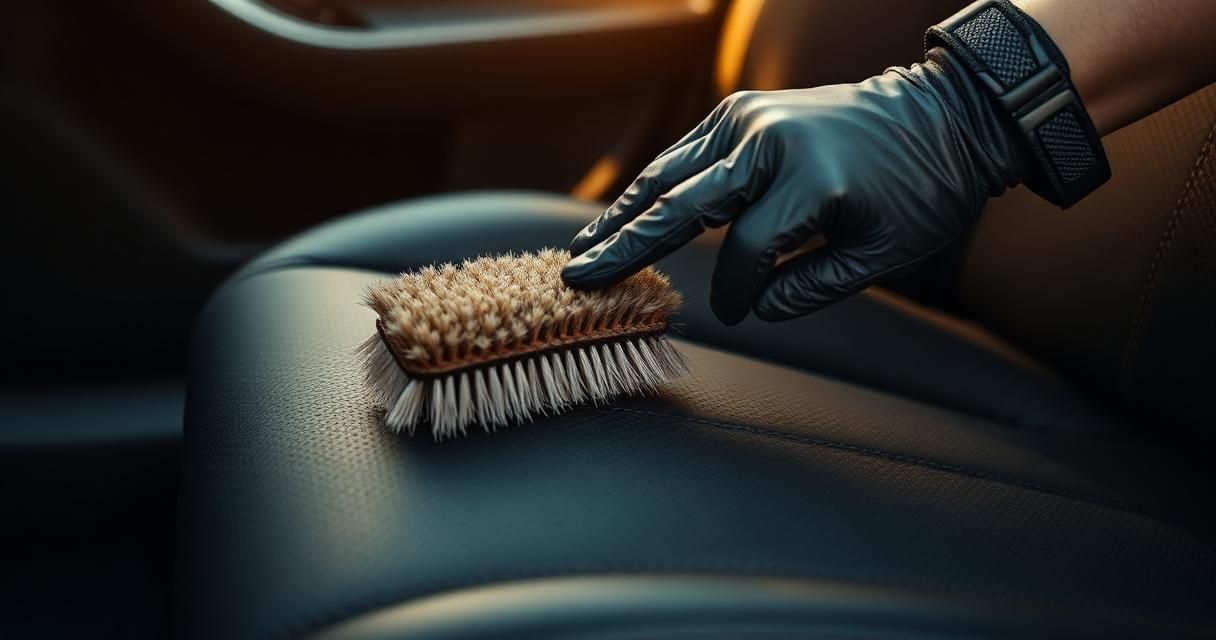
- Step 3. Spray the brush, not the seatApply pH-balanced leather cleaner to a soft horsehair or nylon detail brush. This is non-negotiable on perforated leather.
- Step 4. Agitate lightly in small sectionsWork one panel at a time with light circular pressure. Foam lifting off the surface means it's working — pressure doesn't.
- Step 5. Wipe immediately with microfiberRemove the lifted soil before it dries back onto the surface. Flip to a clean side often.
- Step 6. Let it dry fullyGive it 20 to 30 minutes out of direct sun. Conditioning damp leather traps moisture under the product.
- Step 7. Condition with a water-based productA thin, even coat. Buff off any excess after ten minutes — leftover conditioner is what makes seats greasy and attracts dirt.
What never to use on car leather
- All-purpose cleaner or degreaser — highly alkaline, strips the coating's plasticizers and leads to cracking.
- Magic-eraser style melamine pads — they abrade pigment right off the coating and leave a permanent dull patch.
- Household wipes and glass cleaner — ammonia and alcohol dry the finish.
- Olive oil, coconut oil, or saddle soap — meant for raw hide, not coated automotive leather; they go rancid and stay tacky.
- Silicone-heavy 'leather shine' dressings — they create glare, attract dust, and can transfer to clothing.
- Steam at high heat directly on the panel — fine for carpet, risky on leather coatings and stitching.
Common problems and what to do
- Blue dye transfer from jeans — catch it early with a dedicated leather cleaner and repeated light passes; set-in transfer usually needs professional correction.
- Shiny, hardened driver's bolster — that's body oil built into the coating. It needs a stronger dedicated leather cleaner and several passes, not more conditioner.
- Cracking — the coating has already failed; cleaning won't reverse it. A leather repair specialist can refinish the panel.
- Sticky seats after cleaning — almost always excess conditioner. Wipe down with a damp microfiber and skip conditioner on the next cycle.
- Sour smell from perforated seats — liquid got into the foam. It needs extraction and forced-air drying.
How often to clean and condition
Clean monthly if the car is a daily driver, quarterly otherwise. Condition every three to four months — more in Texas heat, where UV and 140°F cabin temperatures accelerate plasticizer loss, and less on a garaged car.
A FujiWash™ interior detail includes leather cleaning and conditioning with pH-balanced, water-based products, done at your home so the seats aren't sitting in the sun during the process.
FAQ
- What is the best thing to clean leather car seats with?
- A pH-balanced, water-based leather cleaner applied to a soft brush. Factory car leather is a urethane-coated hide, so you're cleaning a finish — alkaline all-purpose cleaners strip it and lead to cracking.
- Can you use baby wipes on leather car seats?
- Not regularly. Most contain alcohol or surfactants that break down the coating's plasticizers over time. They're fine for an emergency spill, but follow up with a proper cleaner.
- How often should leather car seats be conditioned?
- Every three to four months for most cars, and closer to every two months for vehicles parked outside in Texas heat where cabin temperatures regularly exceed 140°F.
- Why are my leather seats sticky after cleaning?
- Excess conditioner that wasn't buffed off. Wipe the seats with a damp microfiber, then skip conditioner on the next cycle and apply a thinner coat after that.
- Can cracked leather car seats be repaired?
- Cracking means the coating has already failed, so cleaning and conditioning won't reverse it. A leather repair specialist can fill and refinish the panel; conditioning regularly is what prevents it in the first place.
- How do you clean perforated leather seats safely?
- Never spray product directly at the holes. Apply cleaner to a brush, agitate lightly, and wipe immediately — liquid that gets into the seat foam through perforations causes odor and takes professional extraction to fix.