
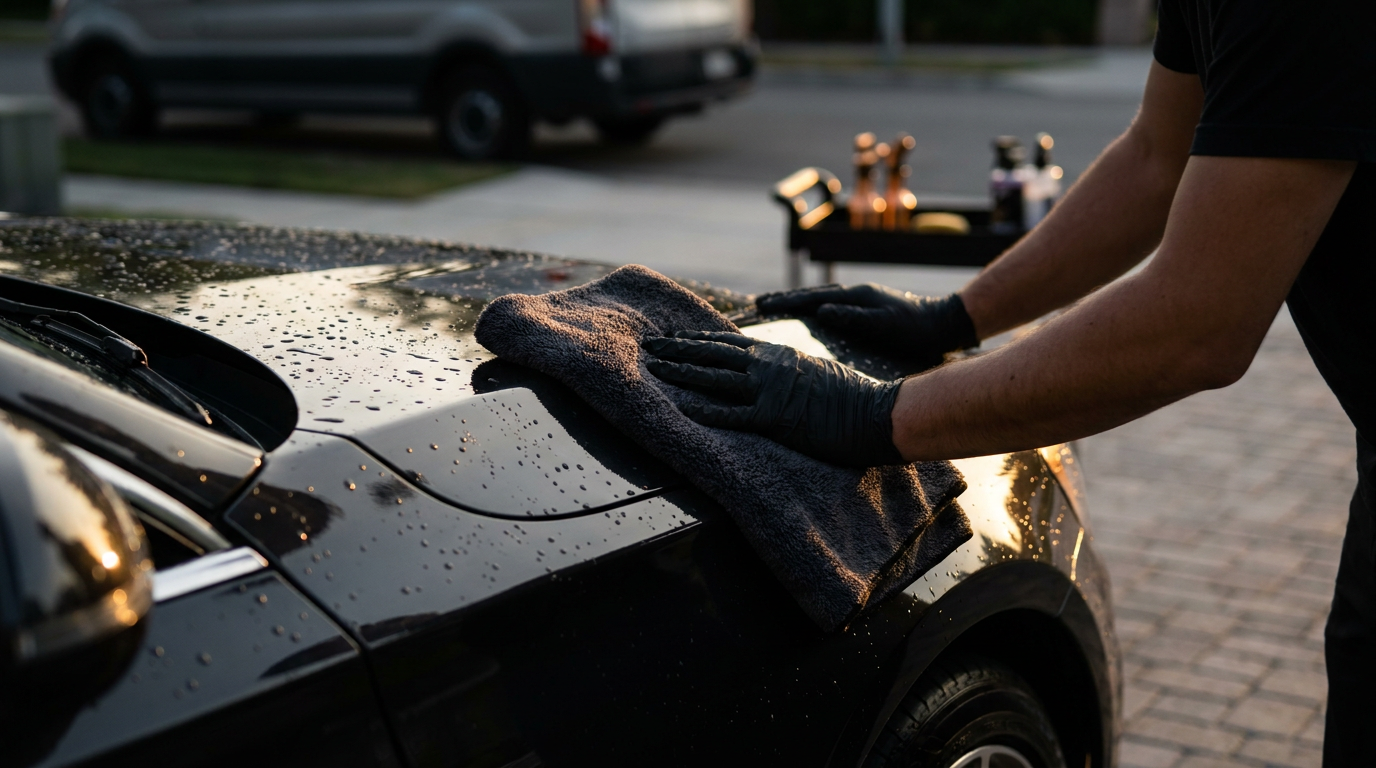
The Exterior Process: Decontamination and Surface Protection
A proper exterior mobile detail does not start with a soapy sponge on the paint. Doing so drags trapped road grit across the clear coat, causing swirl marks and light scratching. Professional exterior detailing follows a strict sequence designed to lift dirt away before any physical contact occurs.
- Wheel, tire, and wheel-well decontamination: Detailers begin at the dirtiest zone of the vehicle. Using dedicated barrel brushes, non-acid wheel cleaners, and citrus degreasers, they strip baked-on brake dust from the faces, inner barrels, calipers, and plastic fender liners.
- Pre-wash chemical soak and foam bath: A thick layer of high-lubricity pH-neutral foam is applied to the vehicle body. This foam dwells on the clear coat for several minutes, dissolving road grime, bug splatter, and bird droppings so they rinse away without mechanical friction.
- Two-bucket contact wash: Using microfiber wash mitts and buckets equipped with grit-guard inserts, each body panel is hand-washed from top to bottom. The wash mitt is rinsed after every section to prevent cross-contamination.
- Chemical and clay decontamination: To remove embedded contaminants that soap cannot touch—such as iron fallout, industrial fallout, and tree sap—the detailer applies a chemical iron remover, followed by an automotive clay bar or synthetic clay towel to leave the paint glass-smooth.
- Touchless forced-air and microfiber drying: High-pressure warm air blowers push trapped water out of mirror housings, door jambs, emblems, and window seals before plush microfiber drying towels blot remaining droplets.
- Tire dressing and exterior protection: Rubber tires receive a non-sling, satin finish dressing that protects against UV dry rot. Paint panels are finished with a durable spray sealant or silica (SiO2) ceramic topper that creates hydrophobic water-beading for several months.
The Interior Transformation: Deep Cleaning Every Square Inch
The interior of a vehicle traps airborne dust, sweat, spilled coffee, skin oils, and ambient humidity. A complete mobile detail targets hygiene just as much as aesthetics, reaching into crevices that household vacuums cannot access.
- Cabin blowout and dry extraction: Compressed air tools and high-velocity tornador nozzles blast pet hair, crumbs, and sand out from seat tracks, seat seams, air vents, and tight console gaps into open areas.
- Deep vacuuming: Technicians perform multi-pass vacuuming across carpet floors, floor mats, upholstered seats, under-seat cavities, and the trunk or rear cargo deck.
- Shampooing and hot-water extraction: Fabric seats and carpet fibers are agitated with enzyme-based cleaners and rinsed using an industrial hot-water extractor. This extracts embedded grime, faint stains, and lingering odors rather than simply masking them with perfume.
- Leather cleaning and hydration: Leather and synthetic leather seats receive a dedicated pH-balanced scrub using soft horsehair brushes to lift embedded oils from grain lines, followed by a breathable conditioner that prevents cracking.
- Dashboard, console, and door card sanitization: All interior vinyl, plastic panels, cup holders, and switches are sanitized with gentle cleaners and detailing brushes, leaving a non-greasy, OEM matte finish with built-in UV blockers.
- Interior glass cleaning: Windshields and windows are degreased with tint-safe cleaners and specialized waffle-weave glass towels to eliminate interior haze, smoke film, and finger smudges without streaks.
Typical Duration: How Long Does a Full Mobile Detail Take?
A standard drive-through wash takes three minutes; a thorough mobile detail takes anywhere from 2.5 to 5 hours depending on vehicle size, condition, and scope of work. Detailers work methodically panel by panel, ensuring that weatherstripping, exhaust tips, and inner door shuts receive the same level of care as front hoods.
A compact sedan or two-door coupe with light everyday dust generally takes around 2.5 to 3 hours. In contrast, a three-row SUV, heavy-duty pickup, or minivan carrying dog hair, sand, and kids' food stains will easily require 4 to 5.5 hours. Quality detailers will not rush this process because fabric drying, chemical dwell times, and thorough brush work require dedicated time to do safely.
Realistic Results: What Mobile Detailing Can and Cannot Fix
Setting clear expectations helps you get the most out of your service. A full mobile detail delivers dramatic improvements, but it is helpful to distinguish between intensive surface reconditioning and body shop repairs.
- What it fixes: Oxidation haze, light water spotting, surface rail dust, greasy steering wheels, stale interior odors, embedded carpet sand, and dull rubber trims.
- What it delivers: High gloss, slick hydrophobic paint, streak-free clarity on all glass surfaces, and a sanitized, factory-fresh interior feel.
- What it does not fix: Deep scratches that catch your fingernail, clear coat failure (peeling clear), cracked leather tears, severe rock chips, or paint dents. Addressing deeper clear coat scratches requires multi-stage machine paint correction, which is an advanced separate service.
Transparent Pricing and the Mobile Advantage
Historically, car detailing suffered from opaque pricing, where mobile operators quoted an attractively low price over the phone only to tack on water fees, fuel surcharges, and surprise condition penalties once they arrived in your driveway.
Leading mobile providers like FujiWash™ have shifted the industry toward transparent flat pricing based on vehicle category rather than unpredictable hourly billing. Under a flat-pricing model, you know your financial investment before the van pulls into your driveway. You get dealership-grade results while working from home, spending time with family, or managing your day, with zero time wasted shuttling vehicles across town.
FAQ
- Do mobile detailers bring their own water and electrical power?
- Most fully equipped mobile detail rigs carry their own pressurized water tanks and commercial quiet generators, making them self-sufficient. Some detailers can hook up to your outdoor spigot or standard household outlet if requested or when working in noise-restricted residential areas.
- How often should I book a full mobile detail?
- For daily-driven vehicles exposed to sun and rain, a full detail every 4 to 6 months keeps clear coat sealants active and prevents interior upholstery from degrading. Vehicles kept in garages can stretch intervals to 6 to 9 months, supplemented by periodic maintenance washes.
- Can mobile detailing eliminate strong odors like smoke or sour milk?
- A standard detail cleans the surface source through hot-water extraction and sanitization, which resolves mild odors. Severe tobacco smoke or spoiled milk usually requires targeted remediation, such as repeated enzyme treatments, cabin air filter replacement, and an ozone generator shock cycle.
- What is the difference between a mobile wash and a mobile detail?
- A mobile wash focuses primarily on a quick exterior rinse, hand wash, tire shine, and a surface vacuum. A full mobile detail includes intensive chemical decontamination, clay bar treatment, long-lasting paint sealant, crevice blowout, steam cleaning, and fabric extraction.
- Do I need to be present for the entire mobile detailing session?
- No. You only need to unlock the vehicle, point out any fragile items or areas of concern, and provide the keys. Once the detailer begins work, you can go about your day indoors or run errands, returning simply for the final walkthrough inspection.