
Lifespan by coating type
Not all hydrophobic products are created equal. The term covers everything from a $10 bottle of spray wax to a multi-year professional ceramic coating, and their lifespans are wildly different:
- Carnauba wax: 2–8 weeks. The original hydrophobic protection. Beautiful warm gloss, but it washes away and degrades in heat quickly.
- Synthetic paint sealant: 3–6 months. Polymer-based, bonds better to clear coat than wax, and holds up through regular washing.
- Spray ceramic / SiO2 detailer: 2–6 months. Easy to apply at home, decent beading, but thin — think of it as a booster, not a coating.
- Consumer ceramic coating (DIY kit): 1–2 years. Real ceramic chemistry, but durability depends heavily on prep quality.
- Professional ceramic coating: 2–8+ years. Professionally prepped and applied coatings chemically bond to the clear coat and are rated in years, not washes.
If a product claims to be 'hydrophobic' but doesn't say how long it lasts, assume weeks, not years. Longevity is the whole point of a true coating.
What shortens a coating's life
Even the best coating won't hit its rated lifespan if the car is abused. The biggest lifespan killers:
- Automatic brush washes — the stiff bristles and harsh detergents strip or scratch the coating layer.
- Harsh chemicals — degreasers, high-pH soaps, and 'touchless' wash acids eat hydrophobic layers fast.
- Skipping washes — ironically, never washing lets contaminants sit on the coating and clog it, killing the beading.
- Hard water spotting — mineral deposits left to bake in the sun can etch through the coating into the clear coat.
- No maintenance topper — most pro coatings benefit from an SiO2 booster every few months to keep the surface slick.
How to make it last as long as possible
The good news: coatings are easy to live with if you follow three rules. Wash with a pH-neutral soap every two to four weeks, hand-dry with a plush microfiber towel so minerals never sit on the surface, and apply a spray SiO2 topper a few times a year.
That's it. A coated car is actually less work than an uncoated one — dirt releases more easily, drying is faster, and you stop fighting water spots. The coating does the heavy lifting; you just avoid actively hurting it.
Signs your coating is wearing off
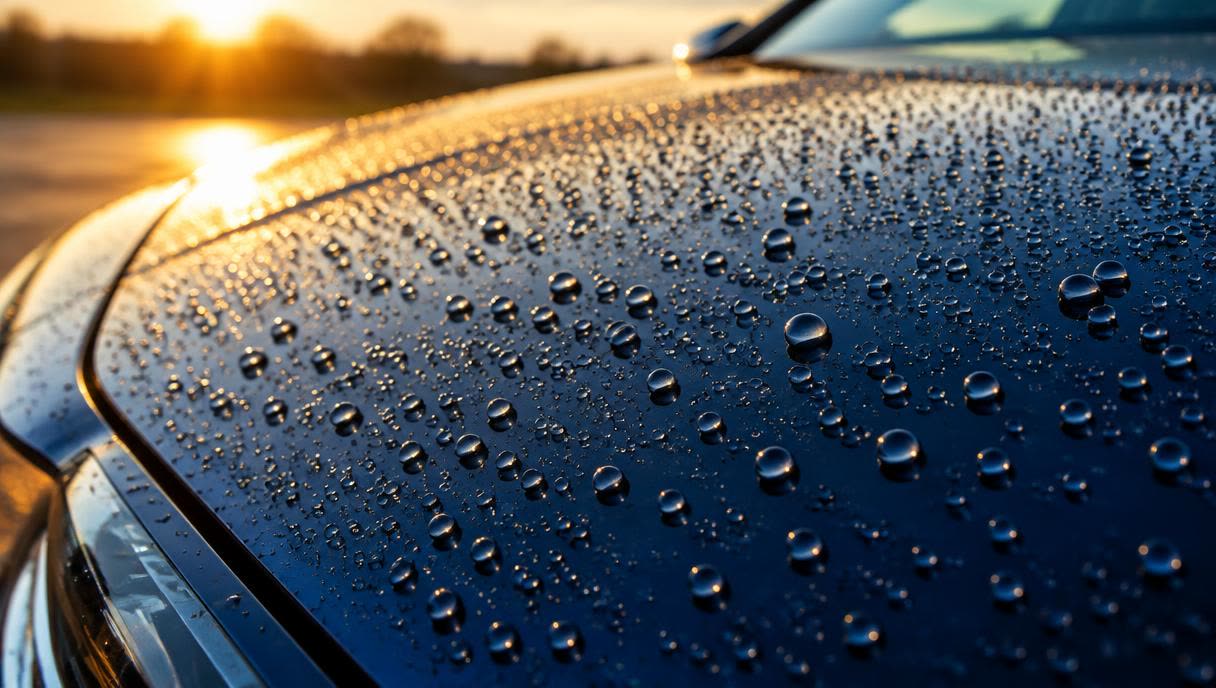
- Water sheets and lies flat on the panel instead of beading into tight rounds.
- Dirt and brake dust stick harder and take more effort to wash off.
- The paint loses its slick, glassy feel when you run a clean hand over it.
- Water spots start appearing after rain or sprinklers where they didn't before.
If you see these on a wax or sealant, it's time to reapply. On a professional ceramic coating, a decontamination wash and topper often restore the beading — the coating underneath is usually still intact.
Is a professional coating worth it?
Do the math on the cheap options: reapplying a sealant every few months means buying product, spending your Saturday, and still getting months — not years — of protection. A professional ceramic coating costs more up front but is rated for years, includes proper paint prep and correction, and is applied by someone who does it every day.
With FUJIWASH™, the coating comes to your driveway — packages start at $299 with flat, upfront pricing, so you know exactly what you're paying before we arrive. For most drivers keeping a car more than two years, it's the lowest cost per year of protection you can buy.
FAQ
- How long does a hydrophobic coating last on a car?
- It depends on the type: carnauba wax lasts 2–8 weeks, synthetic sealants 3–6 months, spray ceramics 2–6 months, DIY ceramic kits 1–2 years, and professional ceramic coatings 2–8+ years with proper maintenance.
- Does ceramic coating wear off?
- Yes, but slowly. A professional ceramic coating degrades gradually over years rather than washing off. Harsh chemicals, automatic brush washes, and neglect shorten its life; gentle hand washing and SiO2 toppers extend it.
- How do I know if my coating is still working?
- Wash the car and watch the water. Tight, round beads that roll off mean the coating is healthy. Flat, slow-moving water that sheets and sticks means the hydrophobic layer is clogged or worn — a decontamination wash or topper usually restores it.
- Can you apply a new coating over an old one?
- Toppers and spray ceramics can go over an existing coating. A new full ceramic coating should only be applied after the old layer is removed or has fully worn away, with proper paint decontamination and prep in between.
- Is a hydrophobic coating worth it compared to wax?
- For most drivers, yes. Wax needs reapplication every few weeks, while a professional coating protects for years, resists chemicals and UV better, and makes the car easier to wash. The cost per year of protection is usually lower with a coating.